
Co-funded by the Erasmus+ Programme, Agenzia Italiana per la Gioventù – AIG – 2022-1-IT03-KA220-YOU-000089929
by Gert Hurkmans, Belgium
The Project Motivation: Why Hip-Hop?
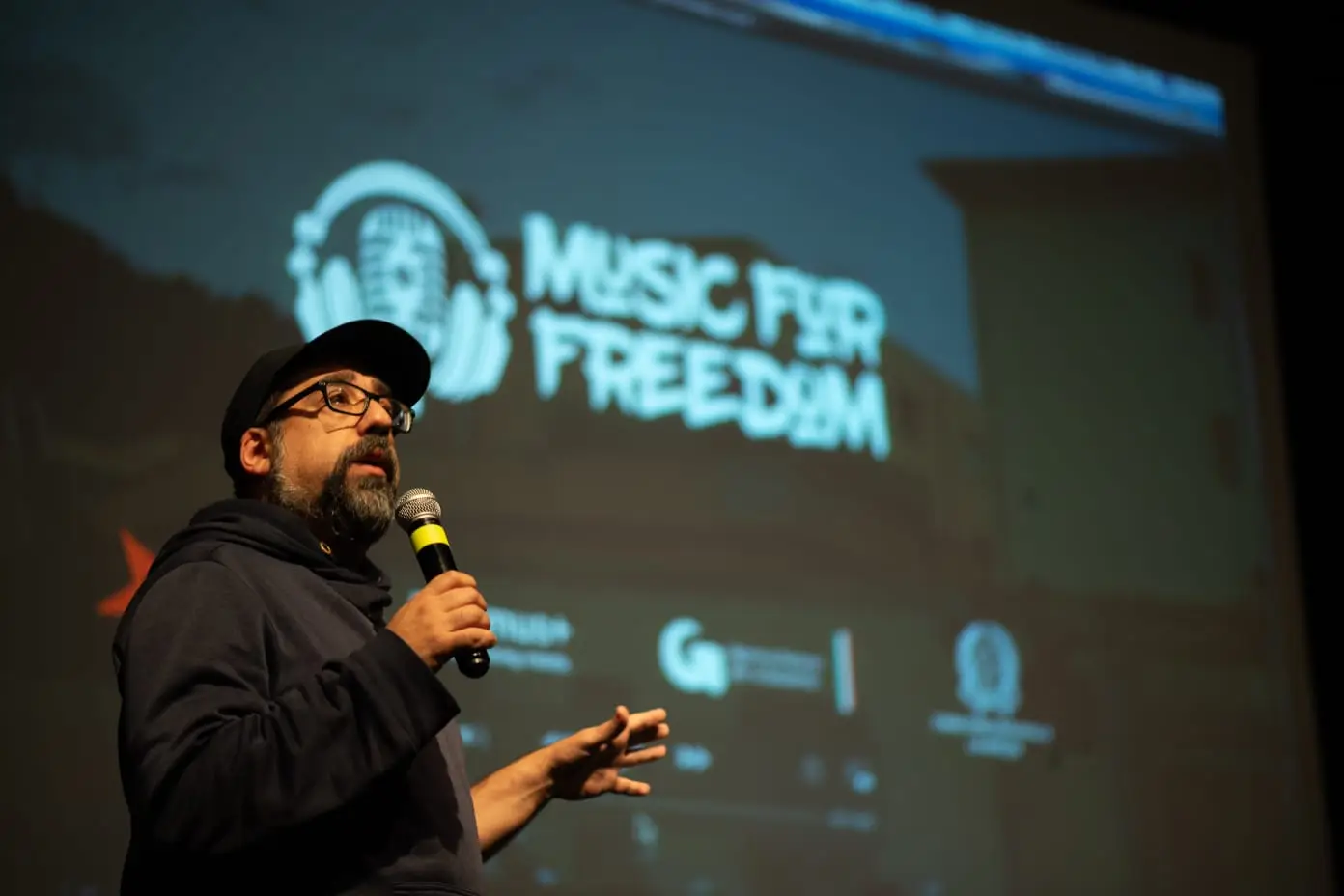
If education and work in prison are essential for social reintegration, the Music for Freedom (M4F) project asked a simple but powerful question: what is the most engaging and relevant vehicle to deliver these essentials to young people in detention?
The answer was found in the global culture of Hip-Hop.
Hip-Hop has repeatedly proven itself as a powerful means of involvement, awareness, and selfexpression for marginalised youth worldwide. Its elements—rapping (MCing), DJing, beat making, and breakdancing—provide a unique outlet for processing trauma, building self-esteem, and telling one’s story. For young people at risk of deviance, already sentenced or on probation, it offers a voice where they often feel silenced.
Despite the clear potential, national public policies in Europe are still a long way from permanently investing in structured, non-formal education programs in prison, particularly in the artistic and musical sectors. The responsibility for such initiatives often falls to the goodwill of the third sector. M4F seized the opportunity provided by Erasmus+ Key Action 2 funding to build a structured, transferable, and sustainable model to fill this gap, representing the first funded project of its kind to bridge hip-hop and the criminal justice world.
Composing the Framework: The Objectives of M4F
The M4F project was built on a foundation of clear, actionable objectives designed to create impact at multiple levels:
- Individual Empowerment: To support the well-being, personal expression, and educational processes of convicted young people through non-formal, musical, and technical education programs inside correctional facilities.
- Skills for Redemption: To increase redemption opportunities for young people with criminal convictions by developing occupational, artistic, and technological skills relevant to the hip-hop market, both during and after detention.
- Educator Capacity Building: To improve the skills and intervention models of youth workers and educators working within the criminal justice system, equipping them with new methodologies.
- Systemic Change: To stabilise and increase the introduction of dedicated spaces/workshops for musical experimentation and production in correctional facilities for both juveniles and adults.
- Creating Career Pathways: To develop synergies with music production companies and offer new professional and job opportunities to young inmates or former inmates.
The Four Key Outputs: Building a Sustainable Legacy
To achieve these objectives, the M4F consortium developed four main intellectual outputs, each serving as a building block for a lasting infrastructure.
R1: Competence Framework for Hip-Hop Music Production This foundational output served to harmonise knowledge and practices around Hip-Hop and its musical components. It provides a comprehensive map of the skills and educational potential inherent in hip-hop culture, specifically tailored for contexts of hardship and imprisonment. This framework ensures that all subsequent training is built on a shared, robust understanding of the art form.
R2: Manual for the Training of Audio Editing Methodologies and Technologies in Prison This practical manual forms the shared basis for creating music production workshops within prison walls. It provides a step-by-step guide for training professionals and volunteers in the technical and artistic aspects of music work with young offenders. From setting up a basic DAW (Digital Audio Workstation) to teaching mixing and mastering, this manual is the “how-to” guide for bringing a studio into a secure environment.
R3: Guidelines for the Management of Audio Music Workshops in Prison Understanding the unique constraints of prison administrations is crucial for sustainability. This output is the key tool for dialogue with public and prison authorities, defining the concrete rules, security protocols, and operational models for applying these practices safely and effectively within institutions. A direct result of this work is the stable presence of at least 6 production workshops—4 inside prisons and 2 in external, post-detention settings.
R4: Memorandum of Understanding The final output focuses on the crucial transition from incarceration to society. It includes a model Memorandum of Understanding (MoU) to facilitate partnerships between prison administrations and music organisations.
The Final Beat
The Music for Freedom project has been more than just a series of workshops; it has been a concerted effort to compose a new score for youth justice. By validating hip-hop as a serious tool for rehabilitation and equipping systems with the frameworks, manuals, and guidelines needed for implementation, M4F has laid down a track for lasting change. It demonstrates that when we invest in the creativity and potential of incarcerated youth, we are not just making music—we are building futures, reducing recidivism, and creating a more harmonious and safe society for all. The project may have reached its final note, but the melody of freedom and opportunity it started is only just beginning to play.
To explore further, please visit:
- Project Website: https://music4freedom.eu/
- Contact Email: comunicazione@arciliguria.it
- Social Media (Facebook, Instagram): https://www.facebook.com/m4f.eu, https://www.instagram.com/m4f.eu
- Youtube: https://youtu.be/Qh-lDC8N3U8
- Local news: https://www.facebook.com/goodmorninggenova/videos/818788823114574