
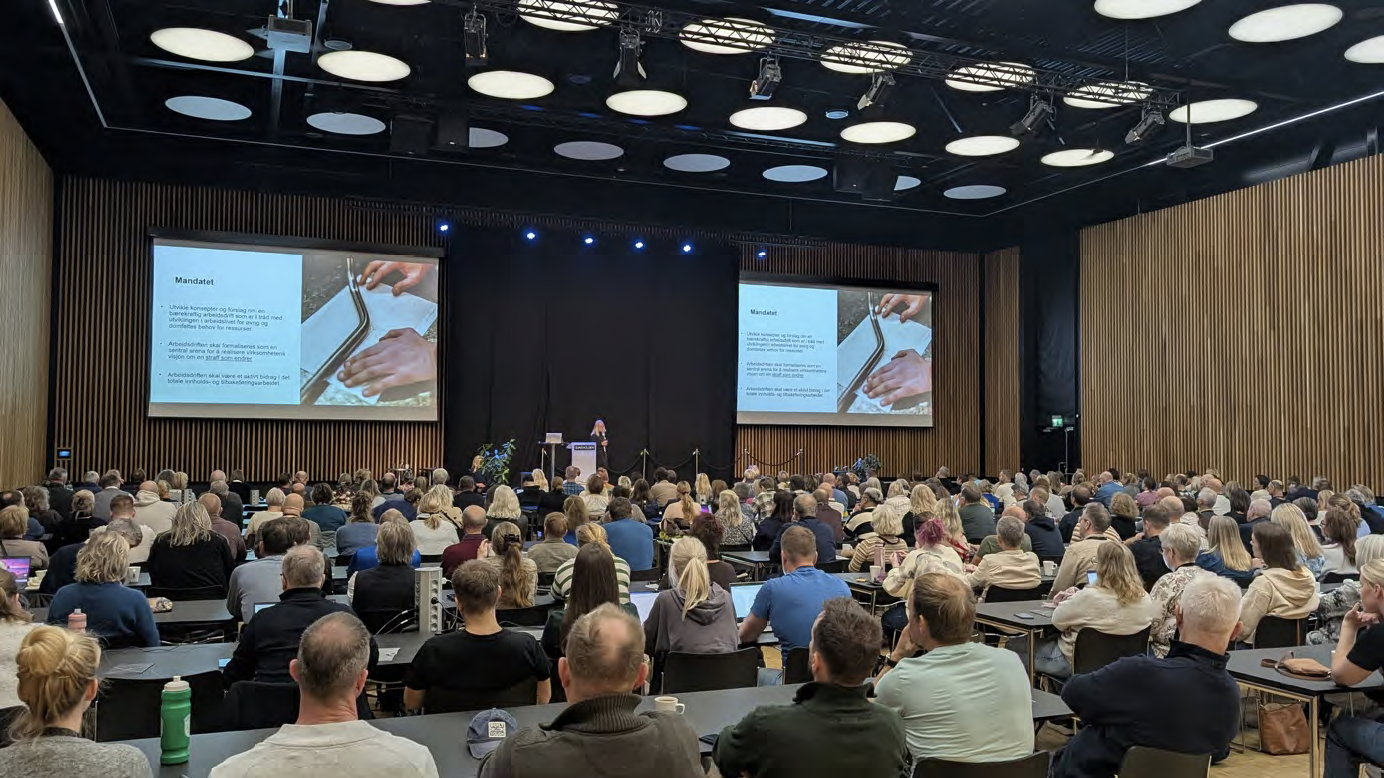
Norway’s Association for Prison Education and Training, FOKO (Norwegian branch of EPEA) gathered practitioners, researchers, and policymakers at Sundvolden Hotel from 29–31 October for its annual conference—a three-day program that moved from big-picture societal challenges to concrete classroom and workshop solutions behind the walls.
Day 1: Setting the agenda—risk, reality, and belonging
After a warm welcome from FOKO Chair Henriette Arveschoug, the opening keynote by University of Oslo professor Willy Pedersen asked a blunt question: “Drugs outside and inside prison—what should worry us, and what can we do?” His framing placed health, harm reduction, and education squarely at the centre of meaningful rehabilitation.
Journalist Diamant Salihu followed with “Swedish Conditions,” a timely look at crossborder gang dynamics and what Nordic justice systems can learn from each other’s successes and failures. The evening closed with TV host and educator Leo Ajkic’s sideways look at “outsiderness,” reminding participants that inclusion is a practice, not a slogan.
Day 2: From policy to practice—tools educators can use now
The morning opened with FOKO’s general assembly before pivoting to a strategic session on “The future of prison work programs,” led by regional corrections leader Tanja Rosså Ødegård — an exploration of how labour, skills, and certification can align with real jobs on release. The correctional services have decided an implementation plan for the years to come.
A striking plenary from SOR’s Guro Granerud addressed intellectual disability among people in Norwegian prisons, underscoring the need for tailored pedagogy, screening, and supports so learners can access education on equitable terms.
Mid-day, participants split across rich parallel tracks that mapped directly onto everyday practice:
- Internationalisation: Using Erasmus+ to exchange methods with European peers—how
- to bring in fresh ideas and build durable partnerships.
- Career guidance: “Who are you, what can you do, what do you want?”—a competencebuilding approach that helps learners surface strengths and plan pathways.
- Everyday uplift: A chaplain’s session on meaning-making and the small “secrets” that keep motivation alive in restrictive environments.
- Lived-experience expertise: From idea to accredited study—how “experience consultants” can professionalise and scale peer-based support.
- “Forvaringspodden”: Change work with people serving preventive detention—what long horizons mean for education and desistance.
- Out of exclusion: “Dale Oen Academy” on creating real change for disconnected youth—translating high-challenge programs into measurable growth.
- “ER VIL KAN”: A program model that seeks “the good in each person,” strengthening identity, hope, knowledge, and change across probation and prison sites.
The afternoon offered two hands-on plenaries. First, “SELFI—Self-help for people in prison”, presented by SIFER North (the University Hospital of North Norway’s Security, Prison and Forensic Psychiatry unit), translated mental-health literacy into practical, selfdirected tools that educators can integrate in learning plans (www.selfi.no). Next, a team from Trondheim Prison shared methods for “activity with vulnerable learners”, focusing on structure, safety, and progression for students with complex needs.
Day 3: Systems, safeguards, and stories
Friday’s program began with a cultural interlude before turning to “NOU 2025:2 Community Protection and Care”, presented by Ila Prison and Security Institution’s Tonje Sandal—an evaluation of sanction types and the safeguarding of people’s health while serving sentences. The session helped participants connect legal reforms to classroom implications, from continuity of care to the right to education.
Former Minister of Justice Knut Storberget then addressed “measures against serious crime among children and young people”, tying early intervention and coordinated services to education’s preventive power—inside institutions and out.
For a final perspective shift, Robert Steen, told “The Story of Ibelin” — how what looks like “outsiderness” may actually be hidden community, if only we learn how to see it. FOKO Chair Henriette Arveschoug offered closing reflections before the “grab-and-go” lunch and shared transport back to the airport.
Why it matters
Across plenaries and workshops, the Sundvolden 2025 conference, underlines that prison education is not a side programme but a system lever: it reduces harm, builds capability, and reconnects people to community. The message is clear—pair humane policy with practical pedagogy, and make space for voices with lived experience. That’s how we turn “outsiderness” into belonging.