
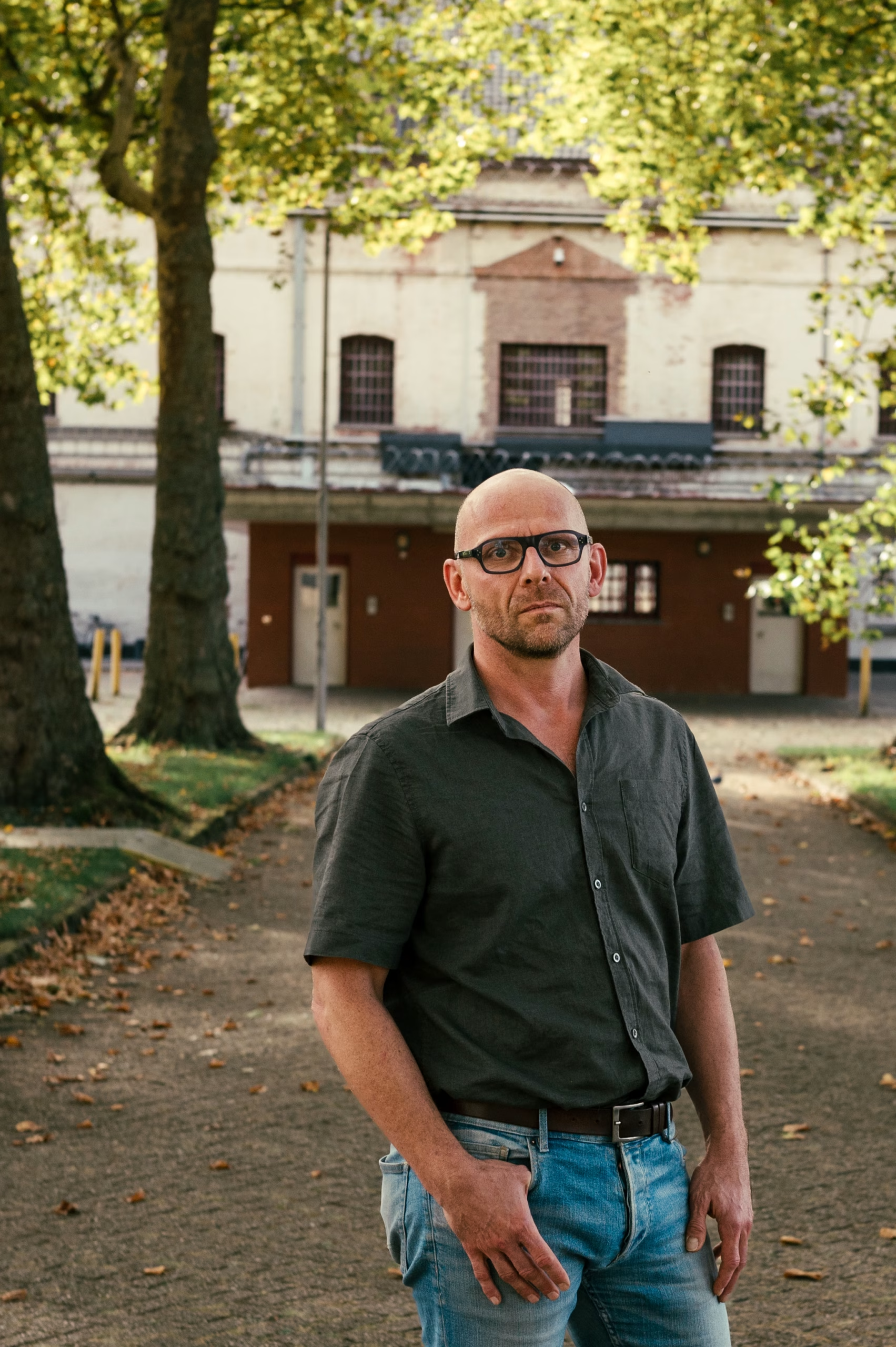
Advocating a free educational offer for the inmates – prison director Serge Rooman (Article from June 2025)
(English text below)
“Onderwijs in de gevangenis is het goedkoopste middel om re-integratie te bevorderen, en net dat dreigen we nu kwijt te raken’, schrijft gevangenisdirecteur Serge Rooman. Hij heeft geen goed oog in de plannen van Vlaams onderwijsminister Zuhal Demir voor het volwassenenonderwijs.
Sedert vorige week regent het en bij momenten hagelt het ijskoude reacties vanuit de sector van het volwassenenonderwijs op de drastische prijsstijgingen die het moet doorrekenen aan haar cursisten. Niet alleen de prijsstijgingen maar ook de weinig flatterende bewoordingen over hobby-cursussen voor bejaarden en singles blijven nazinderen. Een groot deel van de sector leek plots “nice to have” maar zeker niet “need to know”. De suggestie van net niet verantwoorde bezigheidstherapie was minstens gemaakt.
De dramatische gevolgen van deze nieuwe prijspolitiek voor het volwassenenonderwijs in het gevangeniswezen bleven tot op heden onbesproken. De bevoegde actor is hier de Vlaamse Gemeenschap. Zij is immers bevoegd voor het gehele pakket hulp- en dienstverlening aan burgers in detentie waaronder ook het volwassenenonderwijs valt.
Er werd daartoe zelfs aparte organisatie opgericht die de onderwijscoördinatie in de gevangenissen moet faciliteren, het VOCVO. Werd het VOCVO over deze prijsstijgingen geconsulteerd? Het enige wat we met zekerheid kunnen zeggen, is dat de lokale actoren die in de penitentiaire werkelijkheid ploeteren voorafgaandelijk niet gehoord zijn voor advies; leraars noch gevangenisdirecteurs. Het geeft te denken.
De vraag van 1 miljoen is nu of de prijsstijgingen ook in de gevangenissen zullen doorgevoerd worden. Maar hoe onschuldig en neutraal de vraag ook lijkt, ze geeft onmiddellijk een foute perceptie.
Tot op heden was het volwassenenonderwijs in het gevangeniswezen immers gratis. We spreken dus niet eens over een prijsstijging maar van een overgang van gratis naar betalen. Behoudens voor het vak “Nederlands voor anderstaligen” zullen er in het beste geval verminderde tarieven worden aangerekend voor beroepsopleidingen, taalonderwijs en aanvullende algemene vorming.
Dat onderwijs in de gevangenis gratis was, had erg goede redenen. Ik som ze voor de beleidsmakers nog een keer op zodat iedereen minstens mee is in het verhaal.
Ten eerste heeft het overgrote deel van de gedetineerde burgers gewoon geen diploma, laat staan dat men het secundair onderwijs heeft afgemaakt. Dit is de harde realiteit die niet te negeren valt. Afgebroken en onderbroken schoolloopbanen zijn jammer genoeg de norm. Men heeft niets in handen, en vaak zelfs niet de vaardigheden om opnieuw onderwijs te volgen. Dat men met een dergelijk gebrek aan bagage amper tot geen kans maakt op de arbeidsmarkt na de detentie behoeft weinig bijkomende uitleg.
Zelfs zonder stigmatiserend detentieverleden is het vinden van werk zonder diploma een huzarenwerk waar maar enkelingen zonder intensieve begeleiding in slagen.
Iemand re-integreren tijdens detentie, begint dan ook met iemand klaar te stomen voor de arbeidsmarkt met opleidingen. Onderwijs is één van de belangrijkste succesfactoren van een geslaagde re-integratie. Om de drempel tot dit onderwijs zo laag mogelijk te houden, is gratis onderwijs is hier ten zeerste aangeraden. Wat baadt verdere hulp- en dienstverlening als men de fundamenten van re-integratie gaat kortwieken? Zo zaag je de poten onder je eigen beleid weg.
Maar zelfs bij gratis toegang tot onderwijs in de gevangenissen is de individuele keuze om tijdens detentie opleidingen te volgen een aartsmoeilijke financiële beslissing. Werken in de gevangenis daarentegen is zeer aantrekkelijk. Op korte termijn (na het eerste loon reeds) kan men het thuisfront en/of de slachtoffers geldelijk ondersteunen. Dat kan op veel bijval rekenen van de gezinspartners, de slachtoffers of de strafuitvoeringsrechtbanken.
Op langere termijn, met het zicht op een stabiele re-integratie is het opleidingsverhaal veruit de meest verstandige keuze. De praktijk leert dat opleiding juist vanwege het lange termijnperspectief het minst gekozen worden. Het kost bloed, zweet, tranen en veel geduld om gedetineerde burgers aan het studeren te krijgen en ze dit te laten volhouden tot er een attest of diploma is.
Als je dit dan ook nog eens betalend gaat maken, zal de keuze voor opleiding nog sneller dan vandaag afgewezen worden. En daarmee wordt de kans op een stabiele re-integratie echt gehypothekeerd. Wie wordt daar beter van?
Dat onderwijs effectief een sleutelrol kan spelen in het gevangeniswezen werd me duidelijk tijdens een recente studiereis waar ik samen met de onderwijspartners de ALBOLOTE gevangenis in Granada bezocht. Tot mijn verbazing was in deze gevangenis een heus schoolgebouw voorzien met alles waarover een school gangbaar beschikt. Een permanent aanwezig lerarenkorps, een gezellige leraarskamer en een gemotiveerde schooldirecteur vormden het hart van de “school community”. De “school in de gevangenis” wordt letterlijk geïmporteerd vanuit de bestaande scholengroep van de regio waar de gevangenis gelegen is.
De centrale doelstelling van de gevangenisdirectie was helder: elke gedetineerde burger het secundair onderwijs laten afwerken. Leerlingen die het goed deden op de school werden met allerhande incentives beloond om de motivatie hoog te houden (extra bezoeken, extra uitgangen, … ). Zij die reeds een diploma hadden, werden actief gestimuleerd om hoger onderwijs te volgen op afstand. De impact en uitstraling van dit schoolgebeuren op de gevangenis was zichtbaar normaliserend en humaniserend.
De algemene atmosfeer in de klassen was gelijkaardig aan deze in het gewone volwassenenonderwijs in de vrije wereld. De gedetineerde burgers kwamen er netjes naar de lessen en volgden les. Er werd gestudeerd, huiswerk gemaakt, gesport en aan cultuur en reflectie gedaan.
De afroeping van de semesterresultaten in de klas die we bezochten, was aandoenlijk. Sommigen ervaarden voor de eerste keer in het hun leven het gevoel om in een test “geslaagd” te zijn. Ik werd er stil van. Dat het ook zo kan, heeft men daar onder de Spaanse zon met brio bewezen.
Met deze ervaring in het achterhoofd is de mogelijke installatie van betalend onderwijs in het gevangeniswezen een wangedrocht dat niemand ten goede komt. Indien men reintegratie ernstig neemt, moet onderwijs in detentie net versterkt worden, niet belast.
Ironisch genoeg ligt het probleem voor één keer niet bij Justitie. Het is geen federale “shit” zoals dat tegenwoordig om de haverklap wordt gezegd in de Vlaamse regering. Het is dit keer geen federale verantwoordelijkheid, maar de Vlaamse bevoegdheid van Zuhal Demir – en dus ook haar verantwoordelijkheid.
Serge Rooman is gevangenisdirecteur in de instelling in Merksplas.
Education in prison is not a luxury: let it remain free of charge.
Advocating a free educational offer for the inmates – prison director Serge Rooman
“Education in prison is the cheapest way to promote reintegration, and that is precisely what we are now in danger of losing,” writes prison director Serge Rooman. He does not approve of Flemish Education Minister Zuhal Demir’s plans for adult education.
Since last week, there has been a barrage of icy reactions from the adult education sector to the drastic price increases it will have to pass on to its students. Not only the price increases, but also the unflattering comments about hobby courses for the elderly and singles continue to reverberate. A large part of the sector suddenly seemed “nice to have” but certainly not “need to know.” The suggestion of barely responsible occupational therapy was at least made.
The dramatic consequences of this new pricing policy for adult education in the prison system have remained undiscussed to date. The competent actor here is the Flemish Community. After all, it is responsible for the entire package of assistance and services to citizens in detention, including adult education.
A separate organization was even set up for this purpose to facilitate the coordination of education in prisons, the VOCVO. Was the VOCVO consulted about these price increases? The only thing we can say with certainty is that the local actors who toil in the penitentiary reality were not consulted beforehand for advice; neither teachers nor prison directors. It gives pause for thought.
The million-dollar question now is whether the price increases will also be implemented in prisons. But however innocent and neutral the question may seem, it immediately gives the wrong impression.
Until now, adult education in the prison system has been free of charge. So, we are not even talking about a price increase, but a transition from free to paid. Except for the subject “Dutch for non-native speakers,” in the best-case scenario, reduced rates will be charged for vocational training, language education, and additional general education.
There were very good reasons why education in prison was free. I will list them again for the policymakers so that everyone is at least up to speed.
Firstly, the vast majority of prisoners simply do not have a diploma, let alone have completed secondary education. This is the harsh reality that cannot be ignored. Unfortunately, interrupted and abandoned school careers are the norm. They have nothing to fall back on, and often not even the skills to return to education. It goes without saying that with such a lack of qualifications, they have little or no chance on the labour market after their release.
Even without a stigmatizing criminal record, finding work without a diploma is a Herculean task that only a few manage to achieve without intensive support.
Reintegrating someone during detention therefore starts with preparing them for the labour market through training. Education is one of the most important factors for successful reintegration. To keep the threshold to this education as low as possible, free education is highly recommended. What good is further assistance and service provision if the foundations of reintegration are undermined? This is like sawing off the legs of your own policy.
But even with free access to education in prisons, the individual choice to pursue training during detention is an extremely difficult financial decision. Working in prison, on the other hand, is very attractive. In the short term (after the first pay check), it is possible to provide financial support to family and/or victims. This can be met with much approval from family partners, victims, or the criminal courts.
In the longer term, with the prospect of stable reintegration, education is by far the most sensible choice. Practice shows that education is the least popular option precisely because of its long-term perspective. It takes blood, sweat, tears, and a lot of patience to get prisoners to study and to keep them going until they obtain a certificate or diploma.
If you then make it a paid program, the choice for education will be rejected even more quickly than it is today. And that really jeopardizes the chance of stable reintegration. Who benefits from that?
The fact that education can play a key role in the prison system became clear to me during a recent study trip where I visited the ALBOLOTE prison in Granada with my education partners. To my surprise, this prison had a real school building with everything a school normally has. A permanent teaching staff, a cozy staff room, and a motivated school principal formed the heart of the “school community.” The “school in prison” is literally imported from the existing school group in the region where the prison is located.
The central objective of the prison management was clear: to enable every inmate to complete secondary education. Students who performed well at school were rewarded with all kinds of incentives to keep their motivation high (extra visits, extra outings, etc.). Those who already had a diploma were actively encouraged to pursue higher education through distance learning. The impact and influence of this school program on the prison was visibly normalizing and humanizing.
The general atmosphere in the classrooms was similar to that in regular adult education in the free world. The inmates attended classes and followed the lessons. They studied, did their homework, played sports, and engaged in cultural activities and reflection.
The announcement of the semester results in the class we visited was touching. Some experienced the feeling of “passing” a test for the first time in their lives. It made me silent. Under the Spanish sun, they proved with brio that this is possible.
With this experience in mind, the possible introduction of paid education in the prison system is an abomination that benefits no one. If reintegration is taken seriously, education in detention should be strengthened, not taxed.
Ironically, for once, the problem does not lie with the justice system. It is not federal “shit,” as is often said these days in the Flemish government. This time, it is not a federal responsibility, but the Flemish competence of Zuhal Demir—and therefore also her responsibility.
Serge Rooman is the prison director at the Merksplas facility.